September 24, 2026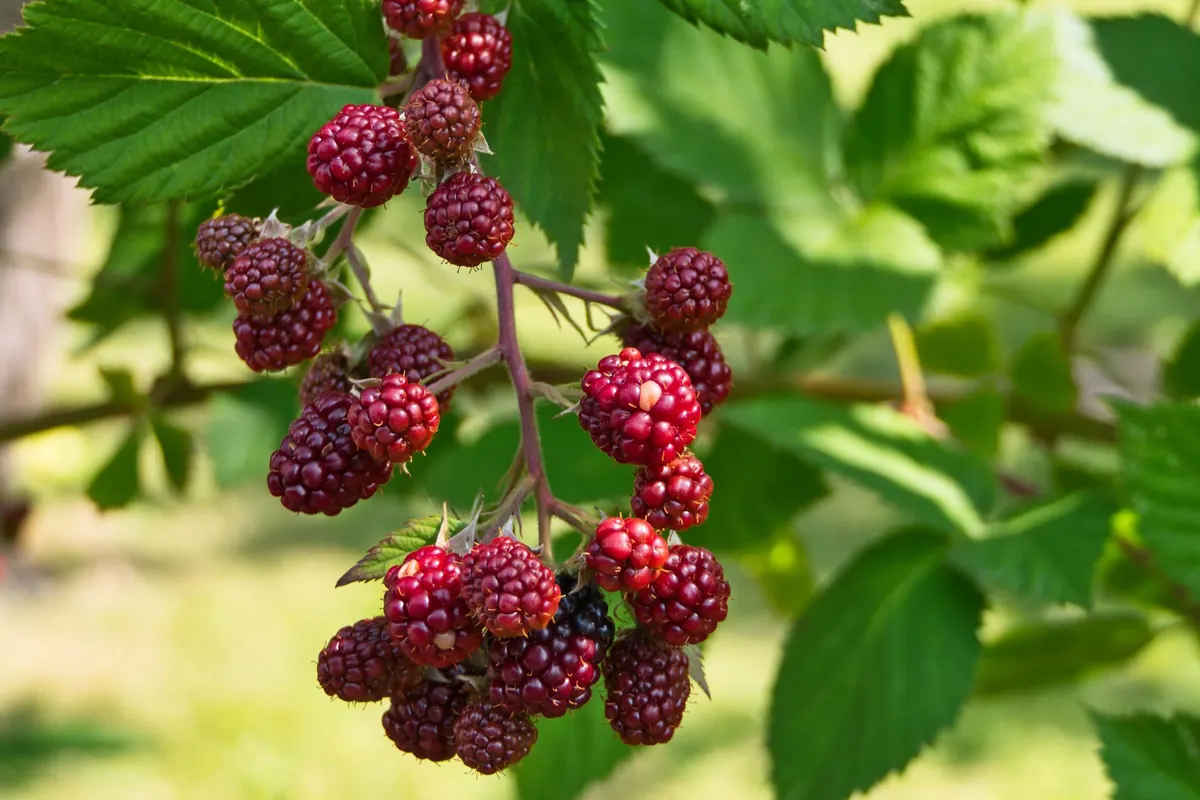
By late July, the brambles along a field edge are heavy enough to pull their canes down into the grass. That's your cue to grab a bucket. Blackberry picking is one of the easiest foraging wins available to a beginner: the fruit is abundant, the season runs for weeks, and once you know a handful of things to check, you'll never confuse a bramble with anything else. What trips people up isn't finding berries. It's coming home with a bucket of sour fruit, shredded hands, or something that looked close enough to be a problem. Here's how to get it right.
Start With the Plant, Not the Berry
Before you look at the fruit, look at the whole plant. Brambles are scrambling, arching canes covered in prickles, with leaves usually arranged in threes or fives. The leaflets are toothed along the edges, often with a paler underside, and in spring the same plant carries white or pale pink flowers with five petals.
The berry itself is the giveaway. It's an aggregate fruit: a cluster of tiny round drupelets packed around a pale central core, the way raspberries are built. That structure matters, because no single round berry with smooth, unbroken skin is a blackberry. If the fruit isn't a bumpy little dome of drupelets on a thorny cane, put your hand down.
The Three-Second Ripeness Test
Unripe blackberries go through red and stay firm, and they taste like a mouthful of chalk and lemon pith. Fully ripe ones are deep black all over, including the shoulder where the berry meets the stem, and slightly dull rather than glossy. Glossy black berries often need another day or two.
The most reliable test is the tug. Cup the berry lightly and roll it with your thumb. A ripe blackberry lets go with barely any resistance and leaves the white core behind on the stem. If you have to pull, leave it and come back. It'll be sweeter, and picking only the loose ones saves you work in the kitchen.
Taste one before you fill a bucket. Blackberries vary enormously from patch to patch, and a bush that tastes flat on Tuesday can be excellent after two warm days.
Ripe berries, at a glance
- Black all the way to the stem end, with no red or purple patches
- Slightly matte, not shiny or tight-skinned
- Gives a little when you pinch it
- Falls into your hand with a light roll, leaving the core behind
- Sweet, not sharp or drying on the tongue
Lookalikes: Berries That Are Not Blackberries
A few common wild berries are dark, round and tempting, and some are seriously toxic. The good news is that the aggregate structure rules most of them out immediately, because none of them are brambles. Learn these four and you'll walk past them without a second thought.
- Deadly nightshade. Single, shiny black berries the size of a small cherry, sitting alone rather than in a tight cluster. The leaves are large, oval and pointed, and the flowers are purple and bell-shaped. The whole plant is toxic.
- Pokeweed. Thick magenta stems, big soft leaves, and long drooping clusters of dark purple berries. Common on disturbed ground and field edges. Toxic.
- Common nightshade. Small, very shiny black berries in loose sprays, with small white star-shaped flowers and deeply lobed leaves. Not a bramble, not worth the risk.
- Virginia creeper and ivy. Bluish-black or black berries in small rounded heads, on vines with five leaflets (creeper) or glossy lobed leaves (ivy). Yew is different again: a red fleshy cup around a single black seed, and the seed is the dangerous part.
If you can't name the plant, don't eat the fruit. There will be more berries tomorrow.
Plant identification apps are a useful second opinion but a poor first one, especially when a mistake means a trip to hospital. If anyone has eaten a berry you can't confidently identify, contact a poison control centre or a doctor straight away rather than waiting for symptoms. And if you're foraging for anyone with allergies, health conditions or a pregnancy, check with a healthcare professional before introducing unfamiliar wild fruit.
Where to Pick, and Where to Walk On By
Blackberries want light and disturbed ground, so the best patches are usually sunny hedgerows, field margins, woodland edges and south-facing slopes. Fruit in full sun ripens first, which means the best picking is often on the outside of the hedge, at arm's length, rather than buried in the shade.
Some places aren't worth it, no matter how heavy the fruit looks:
- Busy roadside verges, where spray drift and exhaust sit on the leaves
- Industrial land, railway embankments and demolition sites
- Field margins beside sprayed crops, and any hedge with an obvious spray line
- Ground level along popular dog-walking paths — pick above knee height as a simple rule
- Nature reserves, parks and private land where foraging isn't allowed, unless you have permission
If you're unsure whether picking is permitted, ask the landowner or your local council. It takes two minutes and keeps foraging a welcome activity rather than a nuisance.
Picking Without Losing Blood
Dress for the job: long sleeves, thick trousers, boots, and gloves you can still feel through. Thornless varieties exist in gardens, but wild brambles are not polite. Watch where you put your feet, too — the canes arch along the ground and hook ankles.
Use both hands. One holds the cane steady and pulls it toward you; the other rolls the berry free and drops it into a shallow container. Don't stack berries more than a couple of centimetres deep, or the ones at the bottom will crush and stain the rest. A wide tub lined with a cloth works better than a deep bag.
Keep the bucket out of the sun and check yourself for ticks afterwards, particularly if you've been pushing through long grass. A quick shower and a change of clothes after a session in the hedgerow is a good habit.
From Bucket to Kitchen
Rinse the berries in a colander under cool water just before using them — soaking makes them mushy. Eat or freeze them within a day or two. Spread them on a tray in a single layer, freeze, then bag them, and you'll have loose berries for crumbles and smoothies all winter.
Anything slightly underripe is better cooked than raw. A handful of firm berries adds pectin and tartness to jam, and they soften quickly in a crumble or a pan of apple compote. Wild fruit sometimes comes with a few small larvae, which are harmless but a good reason not to leave a full bucket sitting warm on a car seat.
Then go back to the same patch in a few days. Brambles ripen in waves, and a hedge you picked clean on Saturday will hand you another kilo by Wednesday. That rhythm — walk, taste, pick, return — is really all there is to it.
Photo: Joerg Hartmann / Pexels